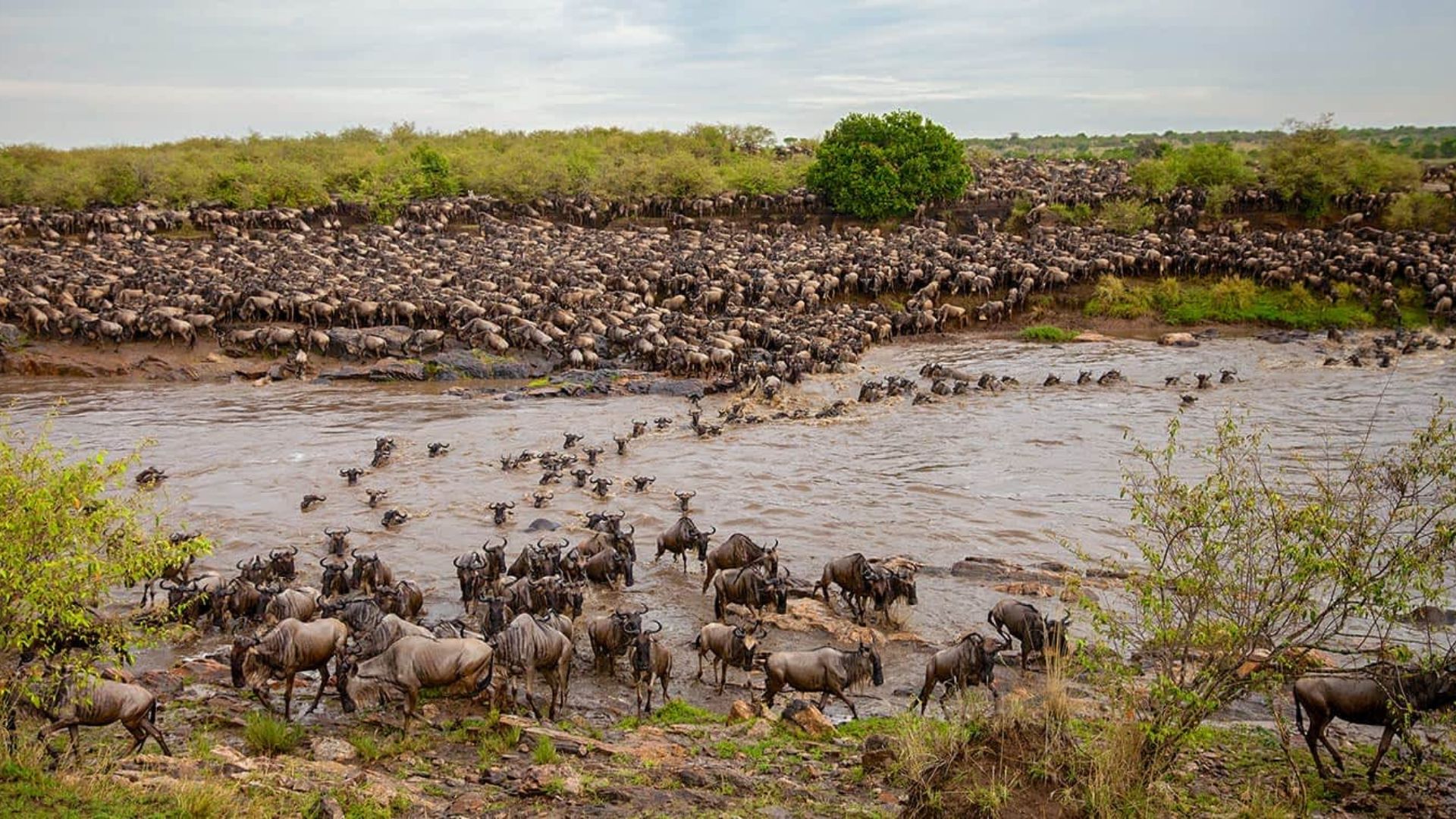
Every year we get some version of the same question: "when should we go to see the crossing?" The honest answer is that the Great Migration isn't a single event on a single date — it's a continuous, year-round loop of over 1.5 million wildebeest, zebras and gazelles following the rain across an 800-kilometre circuit through the Serengeti-Mara ecosystem. Timing a visit well means understanding how that loop actually moves, not chasing a headline month.
Three Myths Worth Retiring
- "The wildebeest cross the Mara River on a specific week in August." In reality, crossings happen sporadically at dozens of sites along the river from late July through October — not in one dramatic afternoon.
- "You have to be in Kenya's Maasai Mara to see a crossing." Roughly 60–70% of the Mara River actually flows through Tanzania's Northern Serengeti (Kogatende and the Lamai Wedge), often with far fewer vehicles than the Kenyan side.
- "Once the herds reach Kenya, they stay until November." Wildebeest don't respect borders. Herds cross back and forth repeatedly through August, September and October, chasing rain over the Lamai Wedge.
How the Season Actually Unfolds
The Advance Vanguard
Front-runners begin arriving in the Northern Serengeti around Kogatende and the Lamai Wedge. Early crossings are tentative, as the herds test water levels.
Peak Arrival, Peak Drama
Mega-herds assemble on both banks. Pressure from the herd behind triggers the mass, crocodile-dodging stampedes most photographs of the migration are known for.
Full Occupation
The herds spread across the whole northern ecosystem, with crossings continuing regularly as animals follow localised rain back and forth.
The Turn South
Grasses thin and the first "short rains" begin building in the south, sparking restless back-and-forth crossings as the herds prepare to head back toward the central plains.
Seasonal Dynamics at a Glance
| Month | Herd Location | Crossing Probability | Crowd Level | Recommended Base |
|---|---|---|---|---|
| June | Western Corridor / Central | Very Low (Grumeti) | Low | Grumeti / Western Serengeti |
| July | Northern Serengeti | Moderate (late July) | Moderate–High | Kogatende & Lamai Wedge |
| August | Northern Serengeti & Mara | Peak (high drama) | High | Kogatende, Lamai, Mara Triangle |
| September | Maasai Mara & North Serengeti | High (consistent) | High | Northern Serengeti & Maasai Mara |
| October | Northern Serengeti & Mara | Moderate to High | Moderate | Kogatende & Eastern Mara |
| November | Central & Eastern Serengeti | Very Low | Low | Lobo, Central Serengeti |
Planning Ahead
Boutique camps in the north book out 9 to 12 months ahead for the peak July–October window, so if the Mara crossing is the centrepiece of your trip, that's the one date on your itinerary worth locking in early. We build the rest of the route — and the exact base camp — around wherever the herds are most likely to be during your travel dates.