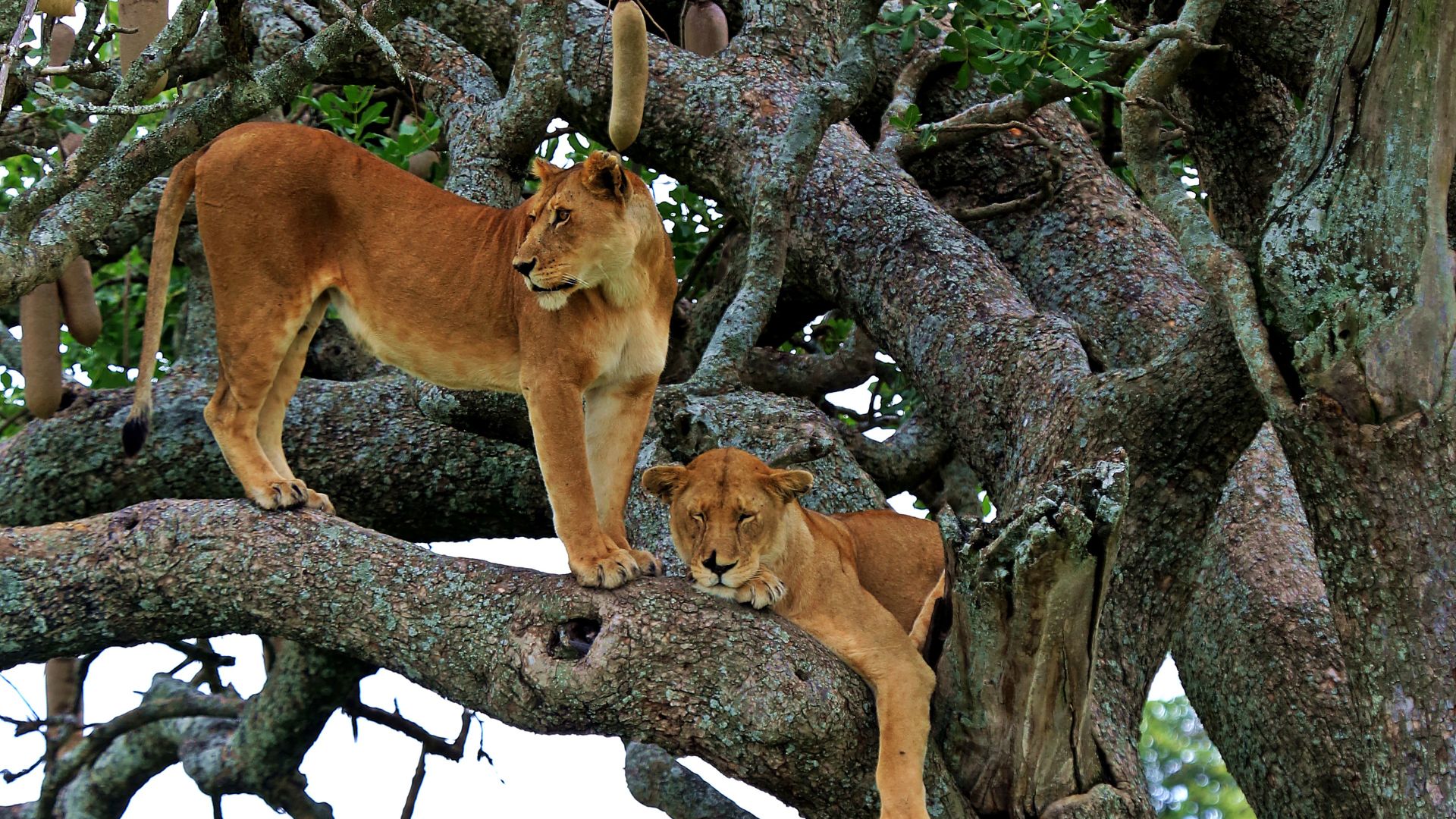
A forest-edged lake at the base of the Rift Valley escarpment, known for flamingos along the shore and tree-climbing lions in its groundwater forest. Usually visited as a soft, scenic transition day between Tarangire and Ngorongoro.
| Feature | Details |
|---|---|
| Location | Arusha & Manyara Regions, Northern Tanzania |
| Park Size | 325 km² (125 sq mi), of which up to two-thirds is water |
| Name Origin | Derived from the Maasai word Emanyara, a local plant used to fence livestock kraals |
| Key Wildlife | Tree-climbing lions, large baboon troops, elephants, flamingos, hippos, giraffes |
| Main Access | 1.5–2 hour paved drive (126 km) west from Arusha |
Immediately upon entering the park, visitors travel through a lush, jungle-like ground-water forest fed by underground springs from the Rift Valley wall — home to one of the highest concentrations of olive baboons in Africa, along with blue monkeys, bushbabies, and hornbills.
While lions are traditionally ground dwellers, Lake Manyara's prides are famous for spending their afternoons resting high in the branches of acacia and mahogany trees to avoid heat, insects, and ground dampness.
During the wet season, the lake's shores transform into a pink ribbon of thousands of lesser flamingos alongside pelicans, storks, and cormorants. In the park's southern section, the Maji Moto hot springs bubble up from the earth at temperatures up to 60°C (140°F) near the lake edge.
Dry Season (July to October) — best for general game viewing, spotting tree-climbing lions, and observing large mammals along reduced water channels.
Wet Season (November to May) — the peak period for birdwatching, lush scenery, and witnessing flamingo concentrations on the lake.
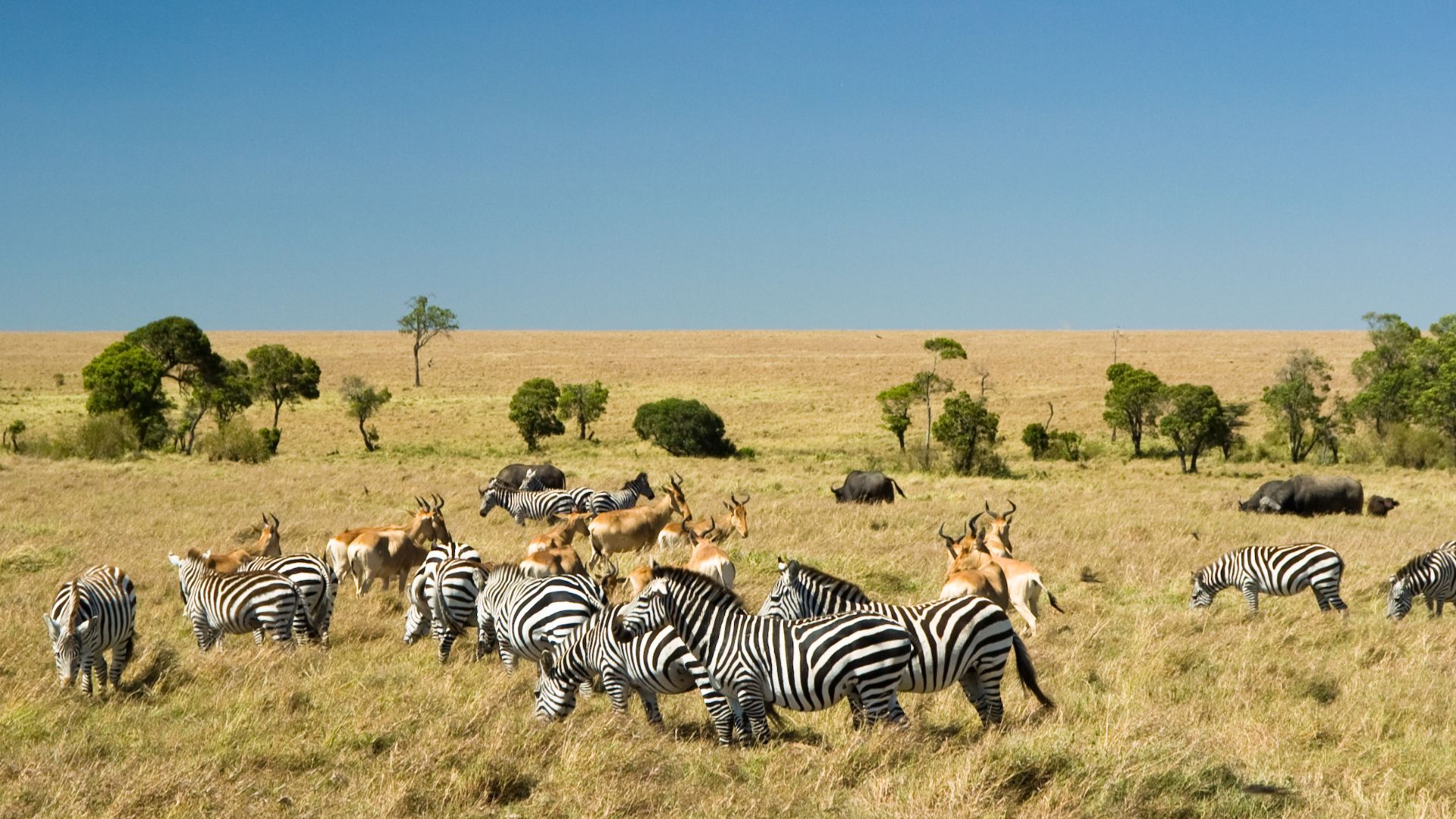
A high-impact, low-fatigue family circuit for families who want big wildlife without long transfers.
Explore JourneyTell us your travel dates and what you're hoping to see, and we'll recommend the right route into it.